
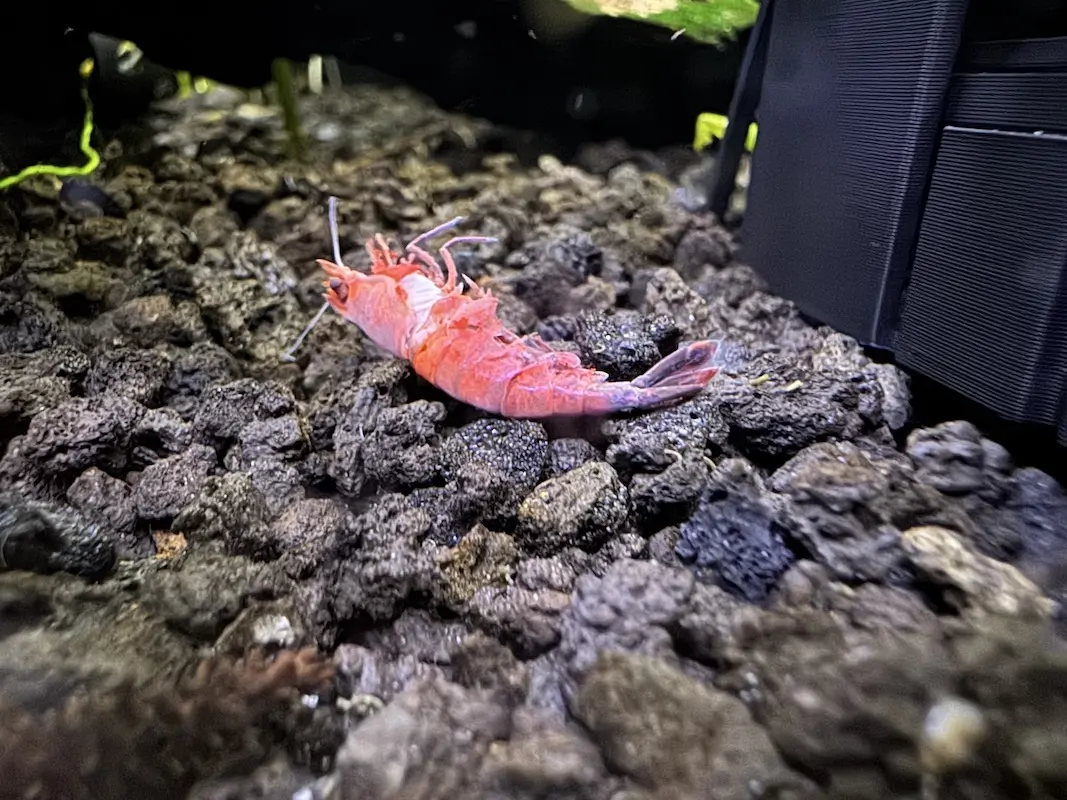
Molting problems usually mean a shrimp is trying to grow in water that is not stable enough, not mineralized correctly, or stressful in some other way. The fix is not always adding calcium. In many tanks, the first fix is testing the water, checking recent changes, and removing the stress that caused the bad molt.
Approx. 7 minutes read
Use this page as a quick diagnostic checklist. For the deeper step-by-step version, use the main guide: How to Solve Common Shrimp Molting Issues.
Quick Diagnosis Table
| What you see | Most likely causes | First checks |
|---|---|---|
| Shrimp stuck in old shell | GH too low or unstable, sudden parameter swing, stress | GH, KH, TDS, recent water change |
| White ring around body | Failed molt risk, mineral imbalance, stress | GH/KH/TDS, ammonia, nitrite |
| Death right after water change | TDS or temperature swing, poor acclimation | New water vs tank water |
| Repeated deaths over days | Ammonia, nitrite, nitrate, disease, unstable tank | Full water test and behavior check |
| Many molts after new water | Large parameter shift or normal growth trigger | Compare before/after TDS and temperature |
Do not treat every molt as a problem. Healthy shrimp shed their exoskeleton as they grow. A clear empty shell in the tank is usually normal. The warning sign is a shrimp that cannot finish the molt, dies during the molt, or shows repeated stress around molting.
Free aquarium checklist
Get the Aquarium Cycling Cheat Sheet
Learn the ammonia, nitrite, and nitrate checkpoints that keep a new tank from turning into guesswork.
No spam. Unsubscribe anytime.
1. Unstable Water Parameters
Shrimp do best when water changes are boring. A sudden swing in temperature, TDS, GH, KH, or pH can trigger stress and failed molts, even if the final number looks acceptable.
Check what changed in the last week:
- Did you do a large water change?
- Did you switch remineralizer or source water?
- Did you top off evaporation with mineralized water instead of plain water?
- Did TDS jump or drop sharply?
- Did temperature change quickly?
If the problem started after maintenance, compare the new water to the tank water. The closer those numbers are, the safer the change usually is.
2. Wrong GH, KH, Or TDS
GH, KH, and TDS matter because shrimp build and shed an exoskeleton in that water. Neocaridina and Caridina do not want the same conditions.
Neocaridina usually tolerate and need more mineral content than many Caridina setups. Caridina shrimp are often kept in softer, more acidic water with different remineralization. Mixing those expectations is a common reason people chase the wrong fix.
Before adding minerals, know what kind of shrimp you keep and test the tank. Adding calcium blindly can create a new parameter swing or push TDS higher than needed.
If you do not know where to start, compare the tank against the Neocaridina water-parameter guide or the Caridina water-parameter guide.
3. Ammonia, Nitrite, Or High Nitrate
Molting problems are not always about minerals. Shrimp under toxic nitrogen stress may fail molts because their whole system is under pressure.
Test ammonia and nitrite first. Both should be zero in a stable shrimp tank. Then check nitrate. Some tanks can run with modest nitrate, but high nitrate plus other stressors can make molting problems worse.
If ammonia or nitrite is present, treat it as a tank-stability problem before thinking about supplements. Reduce feeding, check the filter, remove dead livestock, and stabilize the cycle.
4. Water Changes That Are Too Aggressive
Large, fast water changes can create molting trouble even when the water is clean. Shrimp can react badly to sudden shifts in temperature, TDS, pH, or minerals.
Safer water-change habits:
- Match temperature before adding new water.
- Match TDS and minerals as closely as practical.
- Add new water slowly in sensitive tanks.
- Avoid large emergency swings unless the tank has an actual toxin problem.
- Top off evaporation with plain source water, not extra minerals.
The goal is not never changing water. The goal is changing water without shocking the shrimp.
5. Poor Nutrition
Shrimp need a varied diet, but nutrition problems are usually slower than water-parameter problems. If molts fail immediately after a water change, look at the water first. If growth, breeding, and shell strength look poor over time, then nutrition deserves a closer look.
A steady shrimp diet can include quality shrimp food, biofilm, leaf litter, algae, blanched vegetables, and occasional protein. Do not overfeed powdered or protein-heavy foods. Leftover food can create water-quality problems that hurt molts more than the food helps.
Use the feeding guide if the tank has uneaten food, cloudy water, or inconsistent feeding.
6. Stress And Tankmates
Stress can delay molts, trigger early molts, or leave shrimp weaker during the molt. Common stress sources include aggressive fish, unstable lighting, constant disturbance, poor hiding cover, strong intake flow, and recent shipping or moving.
Freshly imported or newly purchased shrimp are especially vulnerable because they may already be adjusting to very different water. Drip acclimation helps, but the receiving tank still has to be stable.
If shrimp hide constantly, dart around after maintenance, or stop grazing, treat that as a stress signal.
7. Disease, Parasites, Or Injury
Sometimes a molt fails because the shrimp was already sick, injured, or weakened. Parasites, bacterial issues, physical damage, or shipping stress can all show up around the molt because molting is demanding.
Look for other symptoms:
- Fuzzy growths or unusual patches.
- Lethargy and loss of balance.
- Rust-colored marks or shell damage.
- Shrimp isolating from the group.
- Multiple deaths unrelated to water changes.
Do not medicate blindly. First separate water-quality problems from disease signs, then choose a treatment path only when the evidence supports it.
What To Do When A Shrimp Is Stuck In A Molt
There is usually not much you can do to save one shrimp during the actual failed molt. Pulling the shell manually can injure or kill the shrimp.
Instead, focus on protecting the rest of the colony:
- Test ammonia, nitrite, nitrate, GH, KH, and TDS.
- Compare those numbers to the shrimp species you keep.
- Check what changed in the last week.
- Remove obvious stressors.
- Slow down future water changes.
- Watch whether the problem repeats.
If it is one isolated case in an otherwise stable colony, log it and observe. If it repeats, treat it as a tank-level problem.
Should You Add Calcium?
Only add calcium or minerals when testing shows a reason. Shrimp need minerals, but more is not automatically better.
If GH is too low for your shrimp, remineralizing correctly can help. If GH is already appropriate and TDS is high, adding more minerals may make the tank less stable. If ammonia or nitrite is present, calcium will not fix the root problem.
Think in this order: test, identify the mismatch, adjust slowly, then observe.
Prevention Checklist
- Keep water parameters stable.
- Match new water to tank water.
- Avoid sudden TDS swings.
- Test GH and KH instead of guessing.
- Keep ammonia and nitrite at zero.
- Feed small amounts and remove leftovers.
- Provide moss, plants, and hiding cover.
- Use a shrimp-safe filter intake.
- Avoid chasing numbers every day.
Stable shrimp tanks are built through consistency. Most molting problems are easier to prevent than rescue.
FAQ
Is a white ring always fatal?
No, but it is a warning sign. A white ring can appear before a failed molt, especially when minerals or water stability are off. Test the tank and watch closely.
Should I remove shrimp molts from the tank?
Usually no. Shrimp often graze on old molts and recover some minerals. Remove a molt only if it is growing fungus, trapped in debris, or the tank has a disease concern.
Can too much calcium cause molting problems?
Too much mineral content or unstable mineral dosing can contribute to stress. The goal is the right range for your shrimp, not the highest possible calcium level.
Why did shrimp molt after a water change?
Water changes can trigger molting because they change the environment. That can be normal, but a large TDS or temperature swing can make it risky.
What should I check first?
Check ammonia, nitrite, nitrate, GH, KH, TDS, temperature, and recent maintenance. The TDS Calculator can help you compare source water, remineralized water, and tank water.
Next Step
For the full troubleshooting path, read How to Solve Common Shrimp Molting Issues. Then compare your tank to the Neocaridina or Caridina parameter guide.
If the issue may be feeding related, use the shrimp feeding guide. For gear help, start with the Shrimp Guides hub or the Aquarium Equipment Finder.