
Explainer
Fish With Whiskers: What Barbels Are and Who Has Them
Fish with whiskers have barbels. Here's what they do, which catfish and non-catfish have them, why goldfish don't, and how to keep barbels safe.
Approx. 10 minutes read
Fish with whiskers aren’t really growing whiskers at all. Those slender feelers around the mouth are called barbels. You’ll find them on plenty of catfish, like corys and plecos. You’ll also find them on fish that aren’t catfish at all, including loaches, koi and common carp. Goldfish look a lot like carp, but they don’t have barbels.
This guide covers what barbels are and what they do in catfish. It also shows you how to tell which fish have them. Then we’ll get to the part that matters most in a real tank: keeping barbels from getting damaged, and what to do if they already look rough.
Free aquarium checklist
Get the Aquarium Cycling Cheat Sheet
Learn the ammonia, nitrite, and nitrate checkpoints that keep a new tank from turning into guesswork.
No spam. Unsubscribe anytime.
What are the whiskers on fish?
A barbel is a slender, fleshy feeler that grows near a fish’s mouth. Some are short little stubs. Others are long and trailing. How many a fish has, and where they sit, depends on the species.
They aren’t hair, and despite the nickname, they aren’t like a cat’s whiskers. In catfish, they’re sensory tools. They sit right where the fish goes looking for food. We’ll get to how they work in a moment.
Which fish have whiskers?
Catfish are the classic example. Here are three you’ll likely meet in shops. I’m listing them to help you spot barbels, not as a stocking plan. They need very different setups, and some of them definitely don’t belong together.
Corys
Corys are small armored catfish that like to root around in the substrate for food. Heiko Bleher describes this feeding behavior in Practical Fishkeeping. Look at one head-on and you’ll see the barbels clustered around its mouth.

A quick naming note, because you’ll bump into it. Some fish that used to be classified as Corydoras now sit in other genera, including Hoplisoma, after a 2024 study of the cory group. Corydoras itself is still a valid genus. So if a cory turns up under an unfamiliar name, that’s probably why.
Plecos
Yes, plecos are catfish too. The Smithsonian’s National Zoo describes the suckermouth catfish, or plecostomus, as having one set of barbules. Barbules are small barbels. This catfish also has a suction-cup-like mouth on the underside of its head.
That description covers one species, though. “Pleco” covers a lot of different fish. Don’t treat it as a guide to every pleco, or to every bristly growth you might spot on one. That suckermouth catfish also gets big, which is another good reason to research the exact species before you buy.
Pictus catfish
Pictus catfish have long, very noticeable barbels. They’re also a good reminder that whiskery doesn’t mean gentle.
SeriouslyFish describes the pictus as a predatory species. The profile says it’s only suitable with tankmates it can’t swallow. It also notes that the pictus’s activity and long barbels can bother slower fish. On top of that, it’s sensitive to deteriorating water and often loses its barbels when conditions slip.
Which fish have whiskers but aren’t catfish?
This is where people get caught out. Whiskers don’t make a fish a catfish.
Loaches
Loaches aren’t catfish, but some popular ones have barbels. Kuhli loaches are a good example. They’re the slim, eel-like striped fish that love to vanish into the bottom. Pangio semicincta is one fish sold under the kuhli name. Its SeriouslyFish profile describes its barbels. The profile also says it likes to dig and spends some of its time completely buried.
Clown loaches have a barbel too. Their SeriouslyFish profile lists it among the species’ identifying features. Like the pictus, a clown loach needs proper species research before you bring one home.
Common carp and koi
Koi come from common carp, and both have barbels. I’ll show you where to look in the koi vs goldfish section below. It’s the easiest way to tell those fish apart.
Sturgeon
NOAA Fisheries describes the Atlantic sturgeon as having four slender, soft barbels on its snout, in front of its mouth. It’s not a tank suggestion. It’s just proof that barbels turn up well outside the catfish world.
If you’ve got a whiskery fish and you’re not sure what it is, a species-level profile beats a general rule every time.
What do barbels actually do?
The research here is about catfish, so that’s where we’ll start.
In channel catfish, researchers studied nerve fibers from a barbel near the mouth. Most responded to touch, some to taste, and some to both. So a single barbel can feel and taste.
In a sea catfish, taste buds on the barbels were packed most densely along the leading edges. The researchers suggest this likely improves the chance of detecting food. That fish also had taste buds on its fins and body, so its barbels aren’t its only way to taste.
One honest caveat: this research covers only those few species. Other catfish haven’t necessarily been studied the same way, and barbels on loaches, koi or sturgeon may differ too, so I wouldn’t assume any of them work exactly like the studied catfish.
Do koi fish have whiskers? What about goldfish?
Yes, koi do. The USGS Fish Health Program describes common carp, which koi come from, as having two pairs of barbels around the mouth. You’ll see them if you look closely.
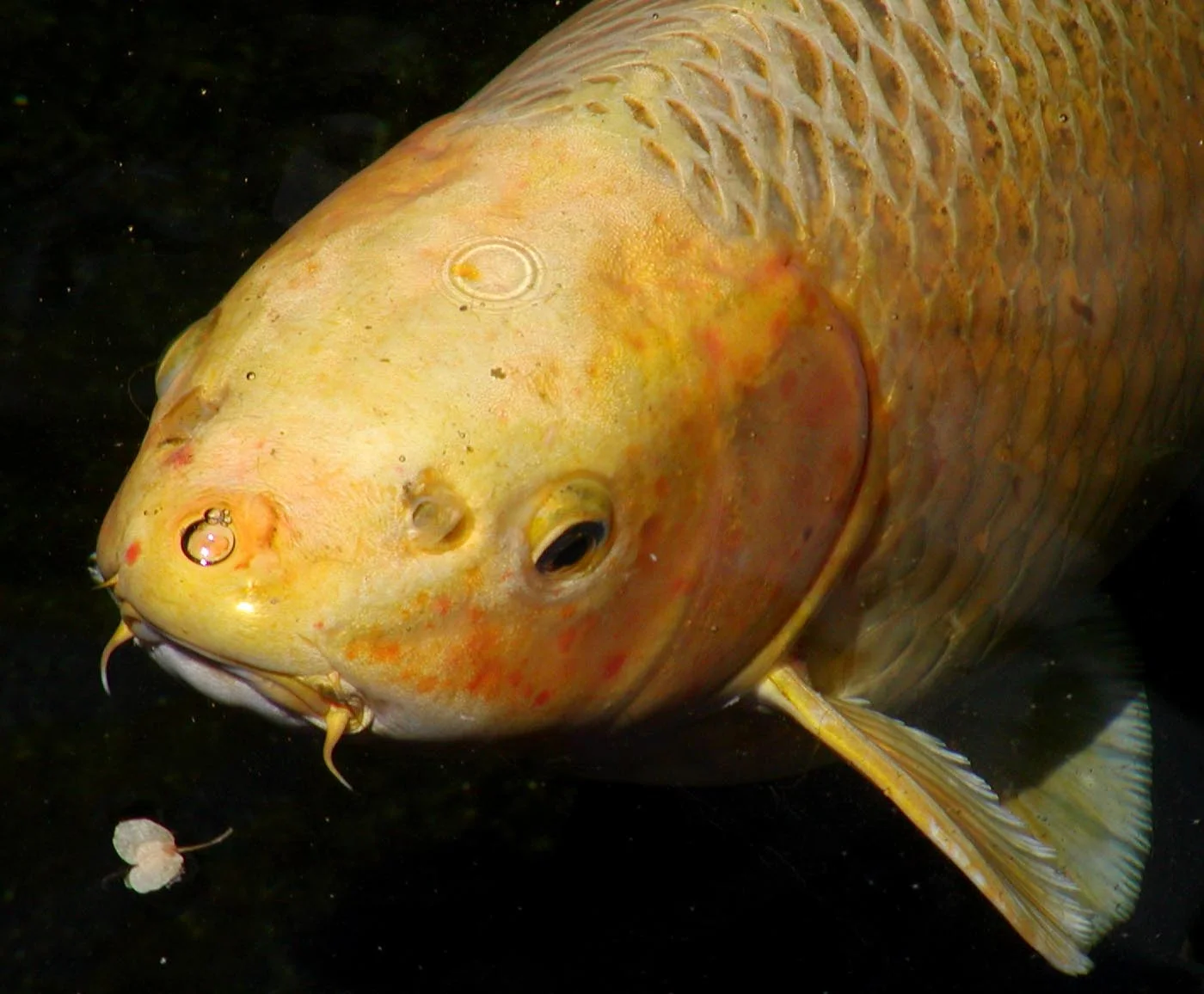
Goldfish don’t. The Missouri Department of Conservation says goldfish resemble common carp but lack barbels on the corners of the mouth. That’s one of the differences its guide uses to tell the two apart.
So if you’re unsure about a pond or shop fish, check the corners of its mouth. Barbels point to koi or carp. No barbels fits a goldfish. If yours turns out to be a goldfish, my guide to what goldfish need to thrive is a good next step.
How do I look after a fish’s barbels?
Start with the exact species. “Fish with barbels” covers small corys, predatory catfish, loaches and more, and their needs differ a lot. Still, a few things come up again and again.
Choose a smooth, suitable bottom
The OATA catfish care sheet puts it plainly. It says all catfish have sensitive barbels, so you should use aquarium sand or fine gravel on the bottom to prevent injury. For corys, Heiko Bleher goes further. He strongly recommends fine sand and warns that corys can damage their barbels feeding in gravel, sometimes leading to infection and barbel loss.
That doesn’t mean all gravel destroys barbels, or that sand fixes everything on its own. The species, the grain and your upkeep all matter. But rough surfaces can injure barbels, and that’s a risk you can plan around from the start. If you’re choosing a bottom now, my guide to different substrates for freshwater aquariums walks through the options.
Loaches deserve extra thought here. Loaches can and will wriggle their way into any crack or crevice. So if your substrate isn’t smooth or soft, like smooth river pebbles or sand, they’ve got a real chance of getting injured. The kuhli profile backs that up. It warns that coarser gravel can stress that species, lead it to damage itself and get in the way of feeding.
Pick hides and decor without sharp edges
OATA notes that many catfish appreciate shelter like wood, pots or caves. Just choose pieces with smooth surfaces. The clown loach profile says to leave out items with sharp edges. It also warns against gaps small enough for a fish to become trapped in. If a rock or ornament has snaggy edges or awkward tight gaps, it’s better left out.
Keep the substrate clean, not just the water
This one gets missed a lot. The SeriouslyFish profile for Hoplisoma simile, one of those renamed corys, calls for a scrupulously clean substrate. It warns that these fish are sensitive to poorly maintained or dirty substrates and can lose their barbels in poor conditions.
Don’t count on corys to tidy up after everyone else, either. The same profile says they’ll eat leftovers that reach the bottom, but they won’t keep the substrate clean. In fact, keeping corys makes substrate upkeep more important.
OATA suggests a siphon for removing solid waste from the gravel, plus regular testing so ammonia and nitrite don’t build up. How much water to change, and how often, depends on your setup and species. Follow guidance for your own tank rather than a one-size-fits-all number.
Make sure food actually reaches them
OATA says catfish should be fed appropriate sinking foods. The cory profile adds that corys won’t do well if they’re left to survive on scraps that escape the fish above.
After feeding, watch. Is the food reaching the bottom? Are your bottom dwellers actually getting it? Anything left uneaten just becomes more waste in the substrate.
Check the tankmates
Not all catfish are peaceful. OATA notes that some species can be extremely predatory. The pictus profile shows how an active, long-barbeled fish can bother slower tankmates. So research the exact species before you mix anything.
Once fish are together, watch for chasing, harassment or any fish being kept away from food. My peaceful community fish guide is a useful starting point. It isn’t proof that every fish listed suits your tank, though, so check each species too.
When should I worry about damaged barbels?
Look closer if barbels look red, worn, shortened or missing, or if the fish goes off its food. Treat that as a clue, not a diagnosis. Damaged barbels can have more than one cause, so work through it calmly.
- Observe and record. Take clear photos a few days apart so you can see whether things are changing. Note which fish are affected and how long it’s been going on. Record whether they’re eating, and note any new fish, skipped quarantine or recent medications. The MSD Veterinary Manual lists this kind of history among the information a vet works from.
- Test the water. Check ammonia, nitrite, nitrate and pH, and confirm the temperature suits the species. MSD calls complete water analysis critical and treats no ammonia or nitrite as the safe condition. If pH is off, work out why before changing anything, and don’t swing it quickly.
- Inspect what they touch. Look for rough grains, snaggy decor, tight gaps, and waste or old food trapped in the substrate.
- Check feeding and tankmates. Make sure sinking food is reaching them. Watch for chasing or food stealing, especially at feeding time.
- Fix what you find, gently. Siphon trapped waste from the problem spots, take out sharp decor and correct the basics for that species. Try not to react by automatically tearing the tank down or throwing out filter media. Depending on the cause, or if an aquatic vet advises it, bigger changes may sometimes be needed.
When to call an aquatic vet
Get advice from an aquatic vet if barbels look red or open, the damage keeps getting worse, a fish stops eating, or you notice breathing changes.
With corys, the odd dash to the surface for air is normal. But the cory profile notes those trips usually become more frequent when water conditions are deteriorating. A clear increase is worth noting and mentioning to the vet.
Please don’t guess with salt or medication. The wrong treatment can make things worse. If a vet prescribes something, follow their instructions and the product label.
I can’t promise damaged barbels will grow back. What you can do is remove the likely causes, keep conditions good and get help early. Those little whiskers do a lot of work, so they’re worth protecting.